
Academics at Child View Public School
A structured, age-appropriate curriculum that builds strong fundamentals, clear concepts and the confidence to think, create and communicate.
How We Teach
Our teaching blends clear explanation with practice and exploration, so children understand ideas deeply rather than memorising them.
Strong fundamentals
Systematic building of reading, writing, numeracy and scientific basics from the earliest classes.
Concept-based learning
Lessons focus on why and how, connecting new ideas to what students already know.
Practical learning
Experiments, projects, models and field activities make abstract topics tangible.
Critical thinking
Questioning, reasoning and problem-solving are practised across every subject.
Creativity
Art, craft, writing and design tasks give students room to express original ideas.
Communication
Reading aloud, presentations, debates and group work develop confident speakers.
Character development
Assemblies, value education and mentoring nurture discipline, empathy and integrity.
Learning at Every Stage
An overview of the stages of schooling. Please confirm with the admission office which classes are currently offered.
Pre-Primary
Nursery, LKG, UKGPlay-way learning, phonics, early numeracy, motor skills and social confidence in a warm, safe setting.
Primary
Classes I – VFoundational literacy and numeracy, environmental studies, languages, art and physical education.
Middle School
Classes VI – VIIIDeeper study of mathematics, science, social science and languages with projects and lab work.
Secondary
Classes IX – XBoard-oriented preparation with regular assessment, remedial support and career guidance.
Senior Secondary
Classes XI – XIIWhether senior secondary classes and which streams run in a given session depends on enrolment — the admission office confirms what is currently offered.
Availability to be confirmed with the school office.
Learning Beyond the Classroom
Co-curricular life builds teamwork, resilience and the joy of discovering a personal strength.

Sports
Outdoor games, athletics and yoga for fitness, discipline and team spirit.
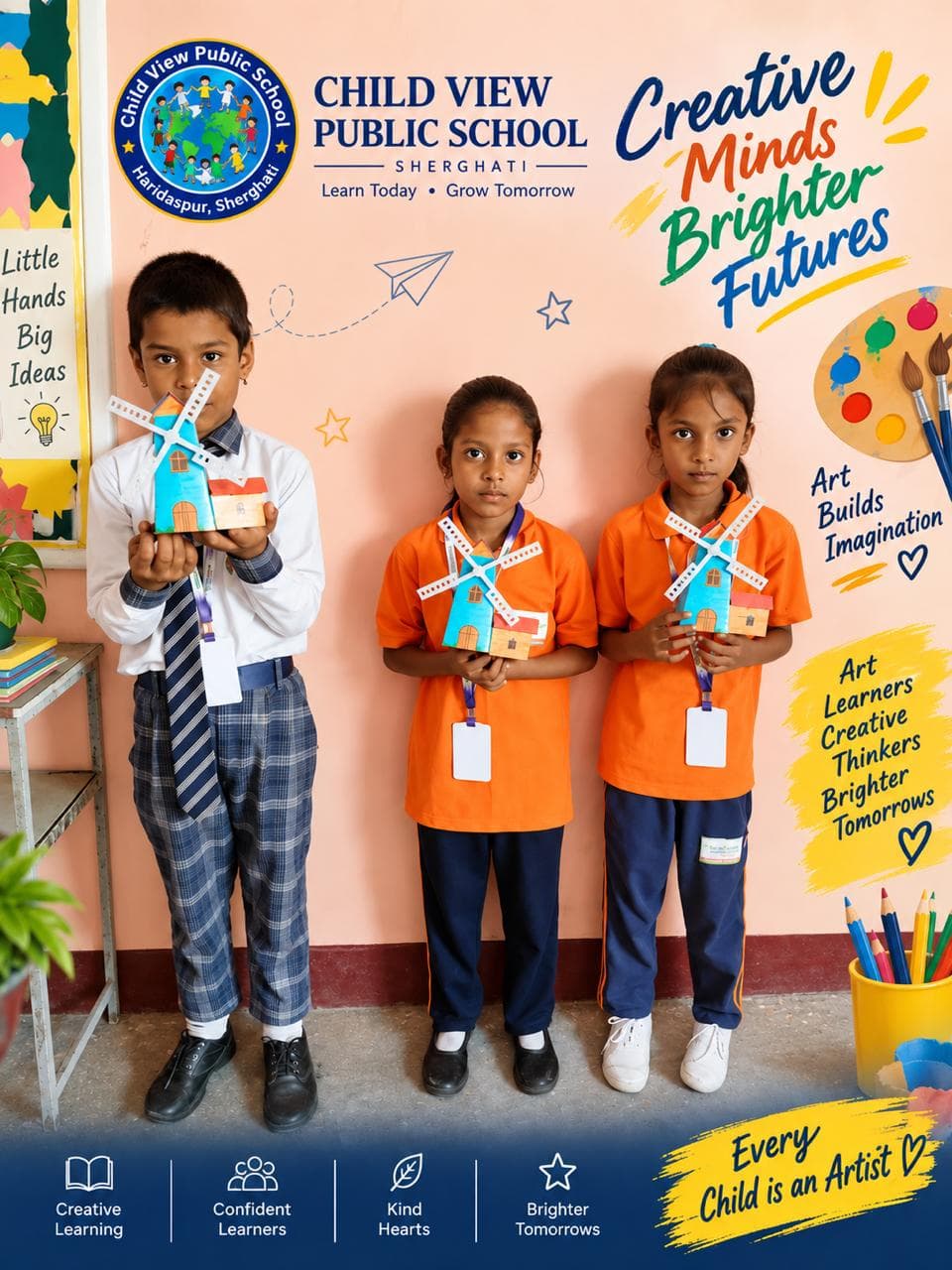
Arts & Craft
Drawing, painting and craft that nurture imagination and fine motor skills.
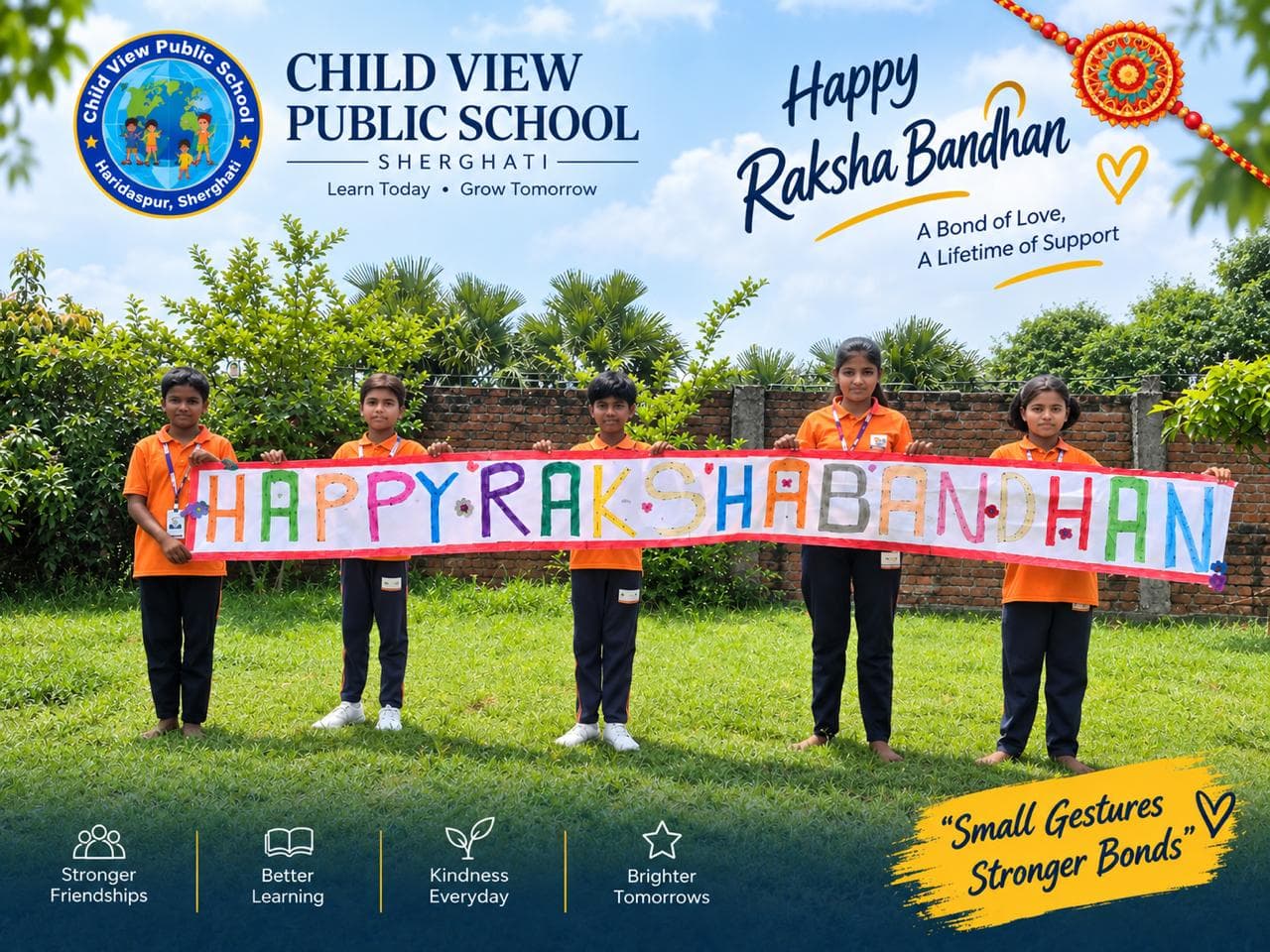
Music & Dance
Vocal, instrumental and dance activities showcased at school celebrations.

Activities & Clubs
Assemblies, quizzes, debates, drama and house activities throughout the year.

Competitions
Participation in inter-house and inter-school academic, sports and cultural events.

Life Skills
Value education, leadership roles and community activities that build responsible citizens.
Questions About Learning at Our School
What parents most often want to know about classes, subjects, activities and how progress is tracked.
Which classes does Child View Public School offer?
The school teaches across the pre-primary, primary, middle and secondary stages — from the earliest Nursery years through to the senior classes. Because the classes running in any given session depend on enrolment, please confirm with the admission office on +91 89359 89302 which classes are open for the class you need.
How does the school teach?
Teaching is concept-based rather than memorisation-based: lessons explain why and how an idea works, then reinforce it through practice, experiments, projects and discussion. Class sizes let teachers know each child by name and give attention where a student needs it.
What subjects are taught?
Students study languages, mathematics, science, social science and environmental studies, alongside computer work, art and physical education. The exact subject combination depends on the class — the school office can share the subject list for any particular year group.
What activities are offered beyond the classroom?
Sports and athletics, art and craft, music and dance, quizzes, debates, drama and house activities run through the school year, along with assemblies and value education. Students also take part in inter-house and inter-school academic, sports and cultural events.
How are students assessed?
Learning is checked continuously through classwork, assignments and periodic assessment, so that difficulties are picked up early rather than at the end of the year. Parents are kept informed of progress and can meet teachers to discuss how their child is doing.
How does the school support students who fall behind?
Teachers identify students who need extra help during regular class work and give remedial attention rather than letting gaps build up. Parents are told early, so that support at school and at home pull in the same direction.
Enquire About Admission
Speak with our admission team about the right class for your child and the steps to join.